
Adult Children Moving Home: How to Make It Work Without Losing Peace or Progress
When an adult child moves back home, the goal should not be to recreate the old parent-child relationship. The household needs a new adult-to-adult agreement.
A successful move-back arrangement usually depends on five things: clear expectations, fair financial contribution, privacy and boundaries, meaningful responsibilities, and a realistic path toward greater independence.
Before the Move-In: Agree on the Basics
Before boxes are unpacked, discuss:
- Why the move is happening
- How long the arrangement is expected to last
- What each person will contribute
- What privacy looks like
- How chores and shared spaces will work
- What progress is expected
- When the arrangement will be reviewed
Avoid relying on assumptions. What feels “obvious” to one person may feel completely different to another.
The Five Parts of a Strong Shared-Home Plan
1. House Rules & Boundaries
Agree on privacy, guests, schedules, shared spaces, communication, and household expectations.
2. Money & Rent
Decide whether rent or another financial contribution makes sense, and how it fits with savings and independence goals.
3. Chores & Responsibilities
Treat household work as an adult responsibility rather than a parent-child negotiation.
4. Work, Saving & Independence
Set practical goals around employment, debt, savings, routines, and measurable progress.
5. Exit Planning
A move-back plan needs review dates and a next-step strategy. The goal is not a rigid deadline; it is preventing a temporary arrangement from becoming indefinite by default.
Should an Adult Child Pay Rent?
There is no single answer for every family.
Rent can help establish adult responsibility, but charging too much may make it harder to save and move forward. Charging nothing without clear expectations can also create problems.
The right approach depends on income, debt, savings goals, household costs, and the reason for moving home.
Make Review Dates Part of the Agreement
Do not wait until frustration builds.
Set a regular review date—monthly, every six weeks, or another schedule that fits your household—to discuss:
- What is working
- What is creating friction
- Whether financial goals are being met
- Whether responsibilities are balanced
- What progress has been made
- What needs to change before the next review
A Move Back Home Should Have a Purpose
Moving home can be a smart financial or personal reset.
The difference between a reset and a permanent holding pattern is whether the household has clear expectations and measurable progress.
Support does not require removing every responsibility. Structure can be part of the support.
Need a Complete System?
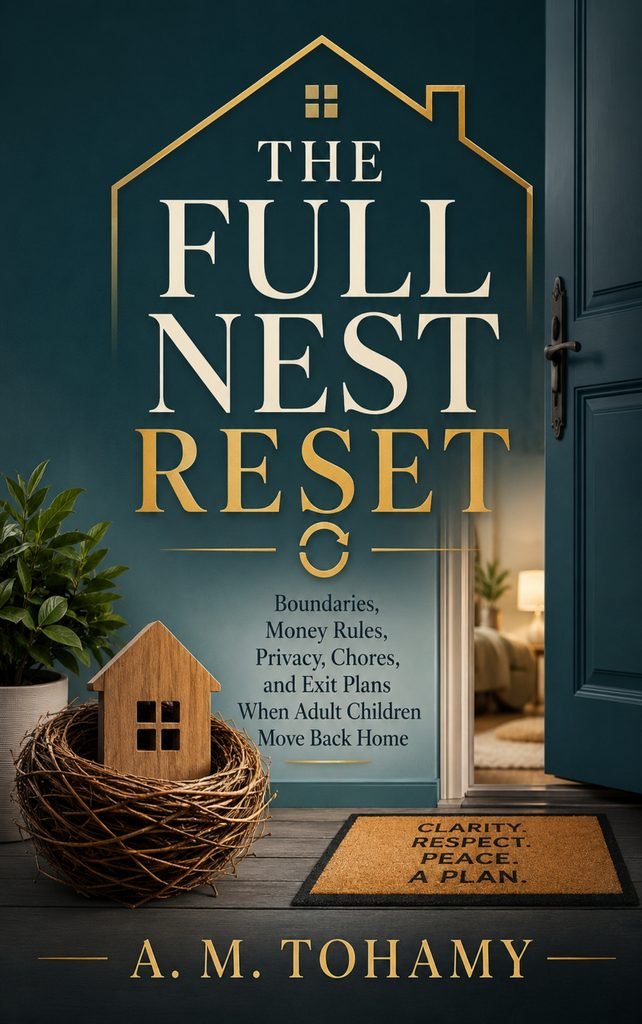
The Full Nest Reset
Boundaries, Money Rules, Privacy, Chores, and Exit Plans When Adult Children Move Back Home
A practical guide for families who want to support an adult child while protecting household peace, finances, privacy, and a realistic path forward.
Start With a Written Plan
A conversation is useful. A written agreement is clearer.
Use the free starter pack to put household expectations, money, responsibilities, review dates, and exit goals in one place.